27 May 2026
Uncovering Collective Insights from Player Logs on Calibrating Peripheral Settings for Consistent Results in Team-Based Competitions

Player logs from competitive titles have become a primary resource for teams seeking stable performance across matches, and analysts continue to extract patterns from input device data to refine peripheral configurations. These records capture details such as mouse polling intervals, DPI adjustments, keyboard actuation timings, and monitor synchronization metrics, which teams compile into shared datasets for group review.
Log Aggregation Practices in Team Environments
Teams in titles like Counter-Strike 2 and Valorant routinely upload anonymized logs after scrimmage sessions, allowing data specialists to identify correlations between hardware settings and outcome consistency. Researchers at institutions across North America and Europe have documented how aggregated files reveal optimal ranges for cursor sensitivity that reduce variance in aim tracking during coordinated plays. Data from these compilations shows that players maintaining polling rates between 1000 Hz and 4000 Hz often record steadier crosshair placement when matched with specific mousepad surfaces.
Calibration extends beyond basic DPI values, since logs also track debounce delays on mechanical switches and vertical synchronization offsets that affect input registration during rapid team maneuvers. Observers note that groups reviewing multi-week datasets can adjust debounce thresholds downward by 2-5 milliseconds on average, which aligns reported input events more closely with on-screen actions in high-pressure scenarios.
Peripheral Variables Highlighted by Collective Analysis
Mouse acceleration curves appear frequently in log reviews, and collective examination indicates that disabling these curves produces more predictable movement vectors across different resolutions. Teams have started cross-referencing these findings with refresh rate logs from 240 Hz and 360 Hz panels, where stable frame delivery correlates with fewer missed inputs during synchronized pushes. Keyboard polling consistency emerges as another focal point, since variations above 2 ms in actuation timing disrupt communication macros used in squad-based objectives.
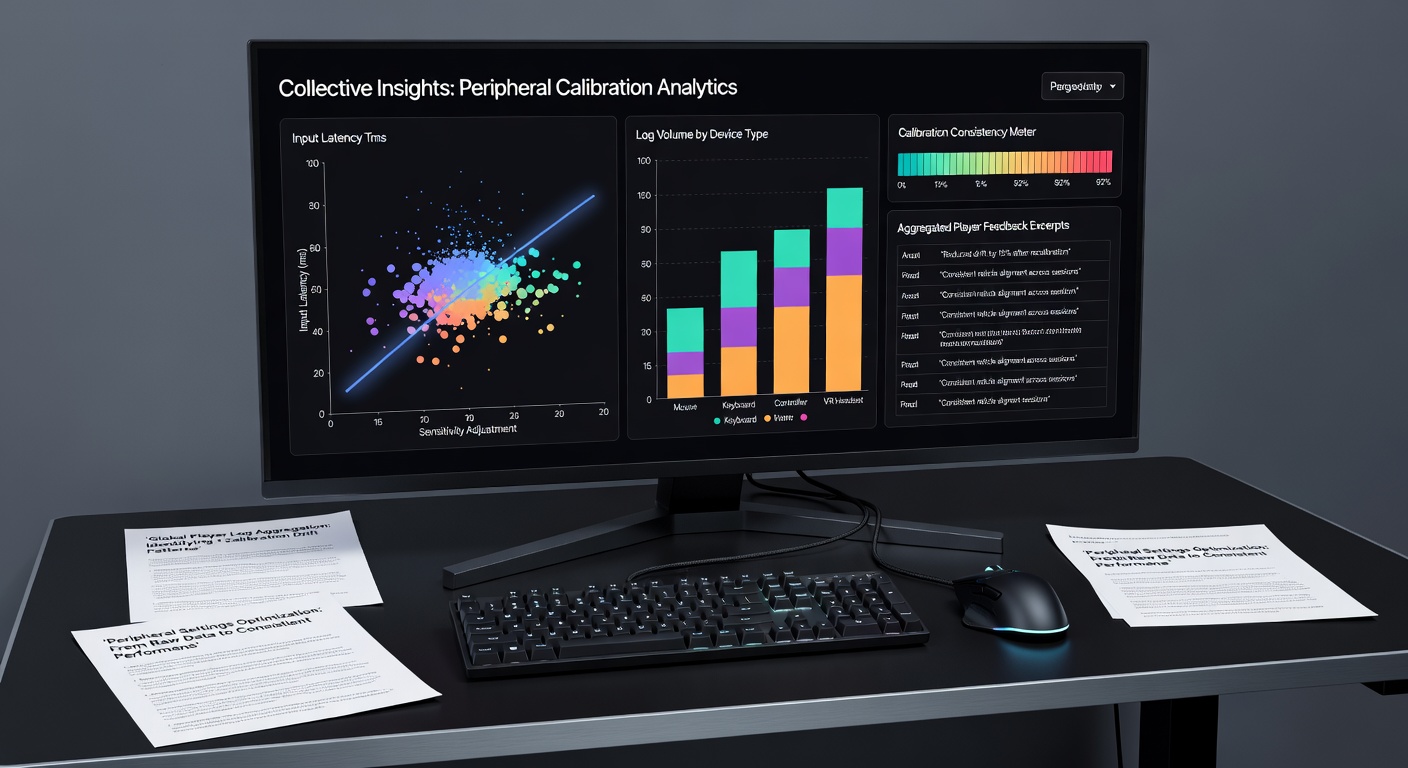
Monitor settings receive equal attention when logs include frame time histograms, and patterns extracted from European league matches demonstrate that low-latency modes paired with calibrated overdrive settings maintain steadier visual feedback during extended sessions. In May 2026, several regional circuits incorporated mandatory log submissions before qualification rounds, which accelerated the sharing of configuration templates among participating organizations.
Implementation Across Different Regions
North American squads often prioritize mouse sensor calibration after reviewing heatmaps generated from thousands of logged engagements, while Asia-Pacific groups emphasize keyboard matrix stability for rapid ability activation sequences. Australian esports federations have released summaries showing that teams applying log-derived adjustments to peripheral firmware achieved tighter coordination in objective capture phases. These regional variations illustrate how local network conditions and venue hardware influence the final tuning parameters selected from shared datasets.
Software utilities designed for log parsing now integrate directly with tournament platforms, enabling real-time flagging of setting drifts that deviate from established team baselines. Academic studies hosted by Canadian universities have validated that such automated comparisons reduce setting-related inconsistencies by measurable margins when applied before match days.
Future Directions for Log-Driven Calibration
Continued expansion of log repositories will likely incorporate additional variables such as wireless signal stability and haptic feedback intensity, since these elements appear in newer peripheral models adopted by professional circuits. Industry reports from trade associations indicate growing interest in standardized log formats that facilitate cross-team comparisons without exposing individual player identities.
Conclusion
Collective review of player logs supplies teams with measurable benchmarks for peripheral adjustments that support repeatable execution in coordinated gameplay. The process relies on systematic data collection, regional adaptation, and ongoing refinement of calibration parameters drawn from competition records. As platforms standardize submission requirements, these insights continue to shape hardware usage patterns across multiple esports ecosystems.