5 Jun 2026
Telemetry Pools from Enthusiasts Highlight Airflow Patterns Minimizing Heat Buildup in Densely Packed Component Arrays for Prolonged Esports Training
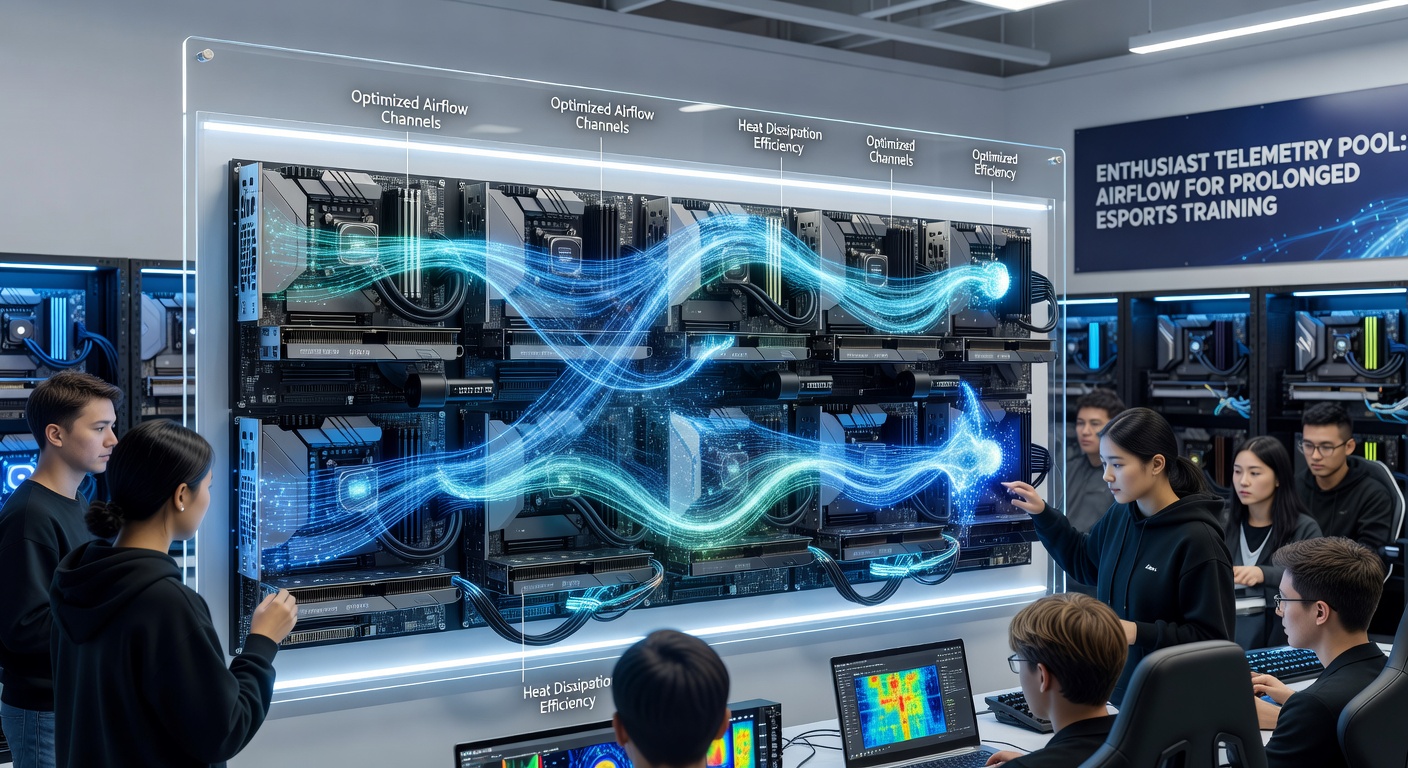
Telemetry pools compiled by hardware enthusiasts have emerged as valuable resources for mapping airflow dynamics inside high-density PC configurations commonly used in extended esports training sessions, and data gathered from multiple monitoring tools shows consistent patterns where targeted fan placements and case modifications reduce thermal accumulation around GPUs, CPUs, and VRMs. Researchers at institutions tracking consumer hardware performance note that these aggregated datasets often come from users running prolonged benchmarks that simulate tournament conditions lasting several hours, and the resulting visualizations reveal how air channels form between tightly arranged expansion cards while avoiding recirculation zones that elevate operating temperatures.
Collection Methods Behind Enthusiast Telemetry Pools
Participants contribute logs from applications such as HWInfo and AIDA64 while operating systems record fan curves, temperature gradients, and power draw under sustained loads, and when these files merge into centralized repositories the combined information highlights repeatable behaviors across different chassis designs. Observers note that clusters of data points from June 2026 sessions indicate improved stability once builders install additional intake vents aligned with GPU exhaust paths, and the patterns hold across both air-cooled and hybrid liquid setups used by competitive players preparing for major events.
Identified Airflow Patterns and Component Interactions
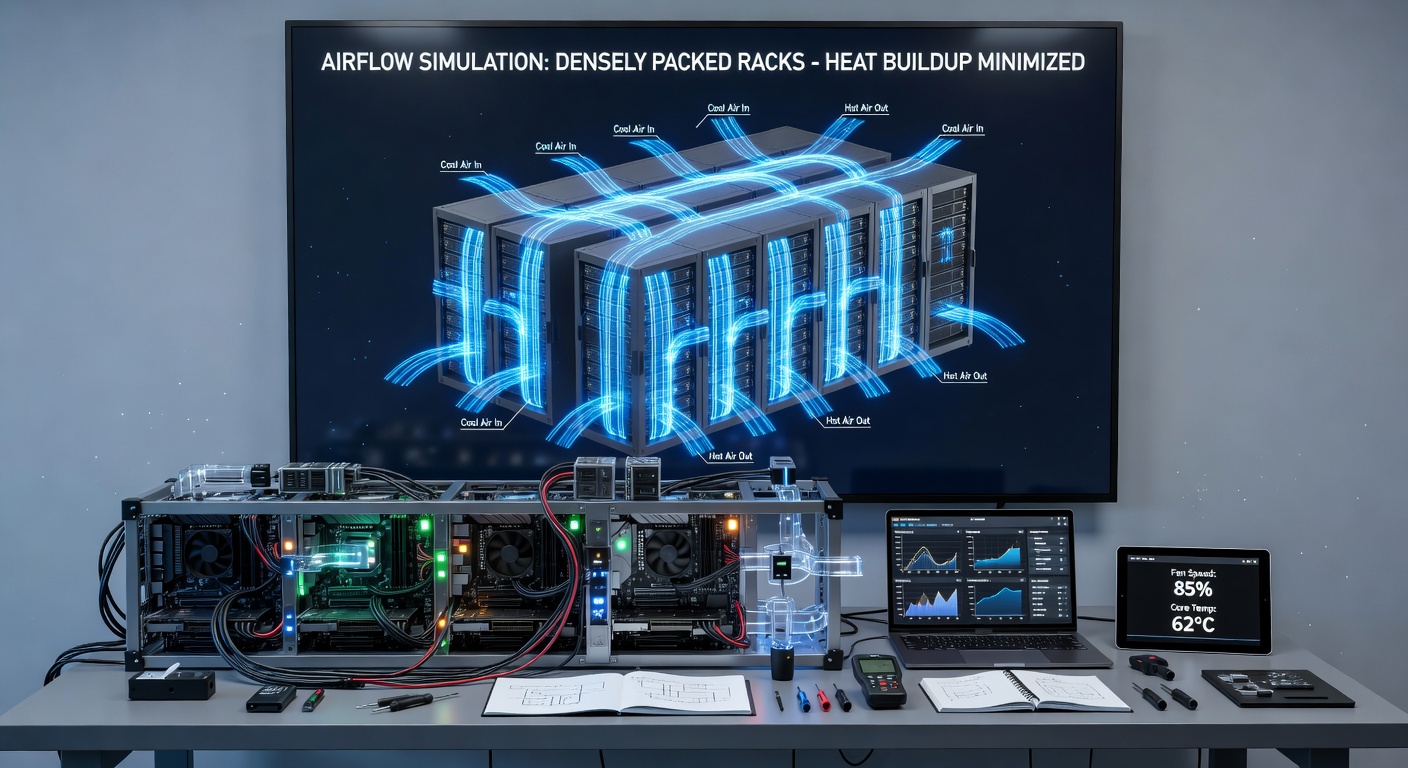
Analysis of pooled records demonstrates that vertical GPU orientations paired with bottom-mounted fans create upward channels that sweep heat away from VRAM modules before it reaches adjacent storage drives, whereas horizontal layouts require side-panel intakes to achieve comparable results. Data indicates that densely packed arrays benefit from staggered fan speeds where front intakes run at higher RPM than rear exhausts, and this differential prevents pressure buildup that otherwise traps warm air around voltage regulators. Those who have examined thousands of submissions find that adding mesh filters at strategic points further refines laminar flow without introducing measurable restriction, and the effect becomes pronounced during multi-hour training blocks where component arrays maintain lower peak temperatures.
What's interesting is how these patterns translate when builders incorporate custom ducting made from 3D-printed baffles, since telemetry shows reduced hot-spot formation near memory modules that previously limited overclock stability. Figures from aggregated reports reveal average temperature drops of several degrees Celsius across tested configurations, and the improvements appear most consistent in mid-tower cases modified to increase positive pressure at the front while maintaining negative pressure at the top and rear.
Application to Extended Esports Training Sessions
Competitive players who integrate findings from these pools report fewer thermal throttling incidents during practice marathons that mirror actual match durations, and the stability allows consistent frame delivery across titles requiring sustained GPU utilization. Experts have observed that configurations following the mapped airflow paths also experience lower acoustic output because fans do not need to ramp to maximum speeds as frequently, and this reduction in noise supports focus during long preparation periods. According to research compiled by the University of California, Berkeley thermal engineering group, similar principles observed in enthusiast data align with laboratory measurements of forced convection in confined spaces, and the parallels strengthen recommendations for case layouts that prioritize unobstructed intake paths.
Case Studies from Community Data
One documented build featuring four storage drives mounted directly beneath a graphics card showed marked improvement after the addition of a dedicated intake duct directing cool air across the drive controllers first, and subsequent telemetry uploads confirmed the change eliminated earlier spikes that had interrupted training. Another example involved a compact ITX system where relocating the power supply to an external brick freed internal space for an additional exhaust fan, and pooled logs from multiple users replicating the modification indicated consistent benefits for systems running at full load over four-hour intervals. These examples illustrate how individual adjustments validated through shared data scale across different form factors without requiring proprietary tools.
Broader Industry Context and Data Sharing Trends
Hardware manufacturers have begun referencing aggregated enthusiast telemetry when designing new chassis models, and the trend accelerates as more regional groups contribute datasets from varied climates that affect ambient intake temperatures. A report issued by the Japan Electronics and Information Technology Industries Association notes rising interest in open thermal datasets that complement official specifications, and the information helps refine cooling solutions for markets where space constraints demand dense component packing. Those monitoring the field observe that June 2026 saw increased participation from users in tropical regions whose submissions highlight the need for humidity-resistant fan bearings alongside airflow optimizations.
Conclusion
Telemetry pools continue to supply actionable insights into airflow management for high-density esports hardware, and the patterns extracted support targeted modifications that sustain performance across extended training periods. Continued contributions from diverse geographic regions strengthen the reliability of identified trends, while alignment with academic measurements lends additional credibility to practical applications. As hardware evolves toward even tighter integrations, these community-driven resources remain central to optimizing thermal behavior without relying solely on manufacturer guidance.