17 Jul 2026
Synthesizing Volunteer Benchmark Repositories to Map Adaptive Resolution Behaviors in Open-World Titles Across Mixed GPU Generations
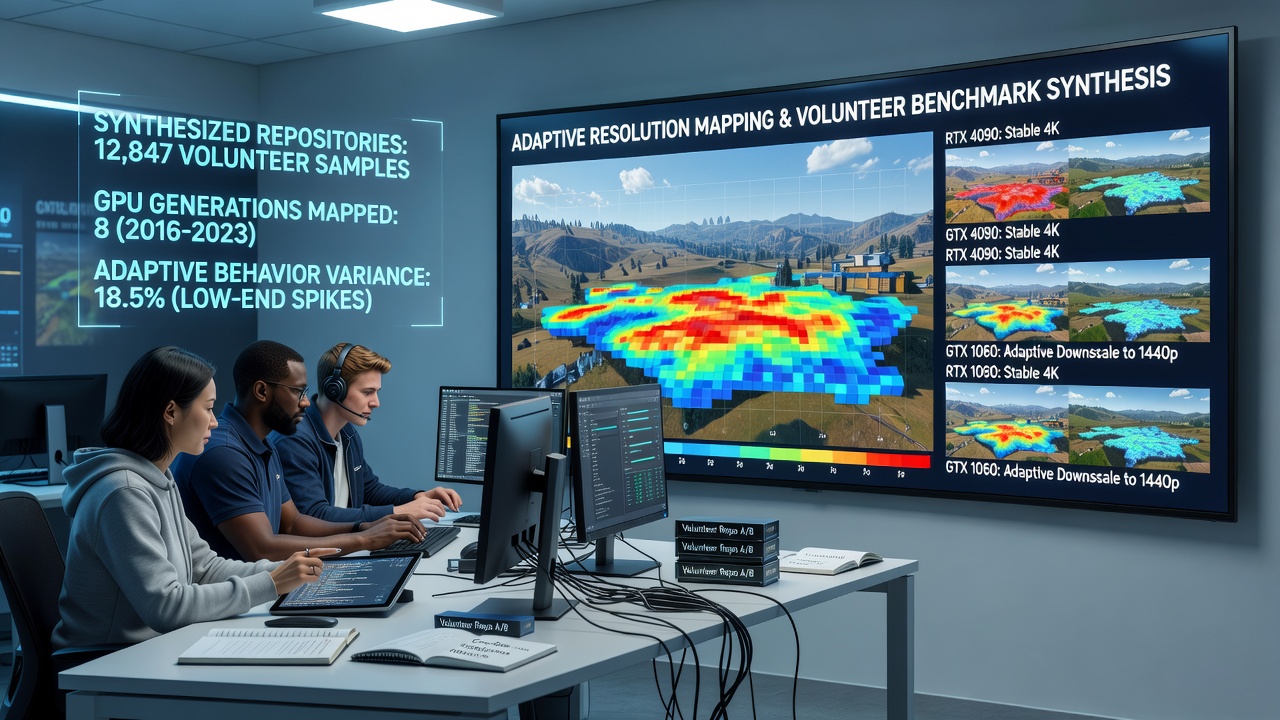
Volunteer benchmark repositories have emerged as central resources for understanding adaptive resolution behaviors in open-world titles running on mixed GPU generations, and these collections draw from thousands of user-submitted performance logs that researchers aggregate into detailed maps. Participants upload frame time data, resolution scaling events, and hardware identifiers from systems spanning RTX 20-series cards through RTX 50-series hardware, which allows analysts to identify consistent patterns in how engines adjust internal rendering resolutions under varying loads.
Repository Construction Methods
Data contributors follow standardized submission protocols that include automated capture scripts alongside manual verification steps, while the resulting datasets undergo filtering for outliers before integration into shared repositories that now exceed several million individual benchmark entries as of July 2026. Researchers apply clustering algorithms to group similar GPU architectures, and this process highlights how older cards often trigger more aggressive downscaling compared with newer models that maintain higher internal resolutions for longer periods during exploration sequences.
Adaptive Resolution Patterns in Open-World Environments
Open-world titles rely on dynamic resolution techniques to maintain target frame rates across diverse hardware, yet the exact thresholds at which scaling occurs vary significantly between GPU generations according to aggregated logs. Mid-generation cards frequently reduce render resolution by 20 to 30 percent during dense foliage traversal, whereas newer architectures sustain native or near-native resolutions until particle or draw-call counts exceed higher limits. These differences become visible when comparing data from the same game title executed on paired systems that differ only in GPU model.
Cross-Generation Comparisons and Scaling Behaviors
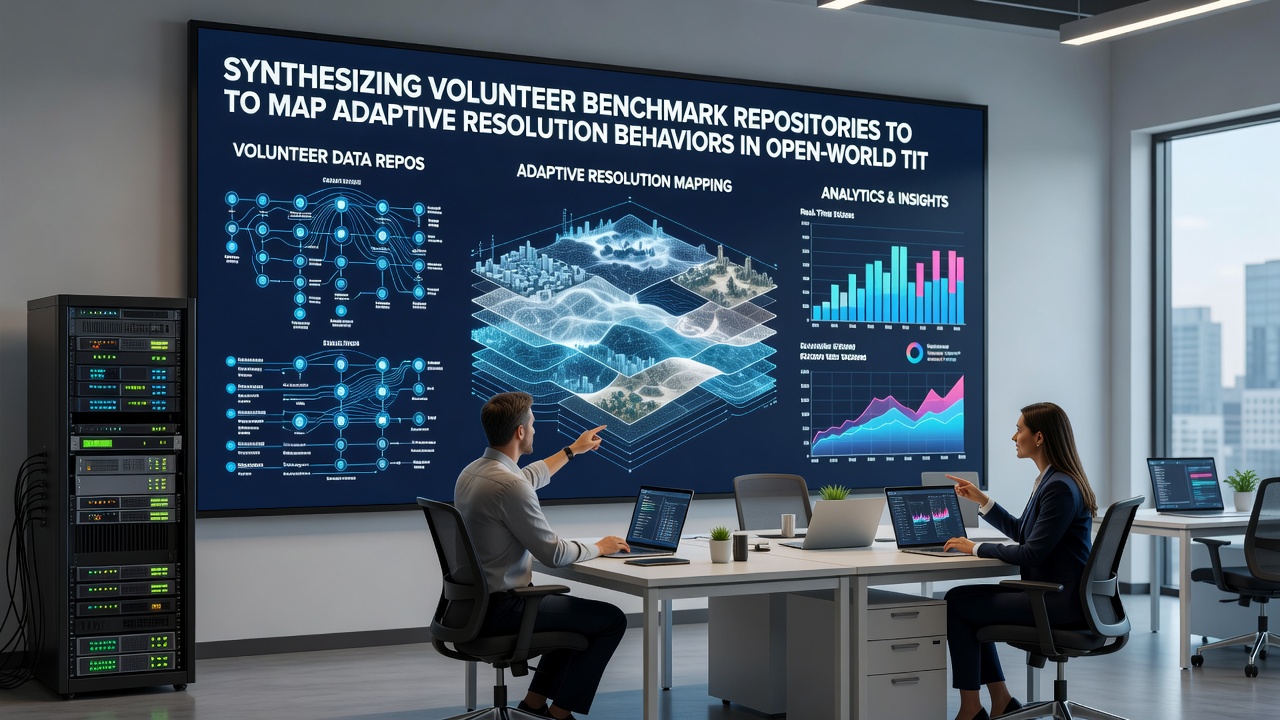
Analysis of repository entries reveals that adaptive resolution triggers align closely with memory bandwidth constraints in older architectures, while compute-unit utilization dominates decisions on newer cards, and this distinction helps explain why certain open-world segments exhibit stuttering on legacy hardware despite similar clock speeds. Observers note that titles incorporating temporal upscaling methods show narrower variance across generations because the reconstruction pipeline compensates for reduced internal resolutions more effectively than traditional spatial scaling alone.
Repositories also capture secondary effects such as shadow map resolution adjustments that often accompany primary render scaling, and these combined changes produce measurable impacts on visual consistency that players encounter during extended sessions. Data collected through 2026 indicates that mixed-GPU households benefit most when repositories include per-title calibration profiles that account for both primary and secondary scaling layers simultaneously.
Integration with Academic and Industry Research
University-led projects have begun incorporating repository subsets into larger studies on rendering efficiency, and one analysis from researchers at the Technical University of Munich examined how adaptive techniques affect power consumption across GPU generations in open-world scenarios. Industry groups such as the International Game Developers Association reference similar aggregated findings when developing best-practice guidelines for engine developers targeting broad hardware compatibility. These collaborations expand the utility of volunteer data beyond individual troubleshooting into systematic performance modeling.
Future Repository Expansion
Plans for repository growth include automated ingestion from cloud-based testing farms alongside continued community contributions, which will extend coverage to emerging GPU architectures and additional open-world releases scheduled through late 2026. Analysts expect that refined mapping techniques will support predictive tools capable of estimating scaling behavior on untested hardware combinations before physical benchmarks occur.
Conclusion
Synthesized volunteer benchmark repositories continue to provide the granular visibility required to map adaptive resolution behaviors across mixed GPU generations in open-world titles, and the resulting datasets support both academic inquiry and practical optimization efforts. Continued expansion of these resources through structured collection methods ensures that performance characteristics remain documented as hardware diversity increases.