22 Jun 2026
Shared Calibration Databases Refine Audio Synchronization for Environmental Cue Detection in Narrative Exploration Games
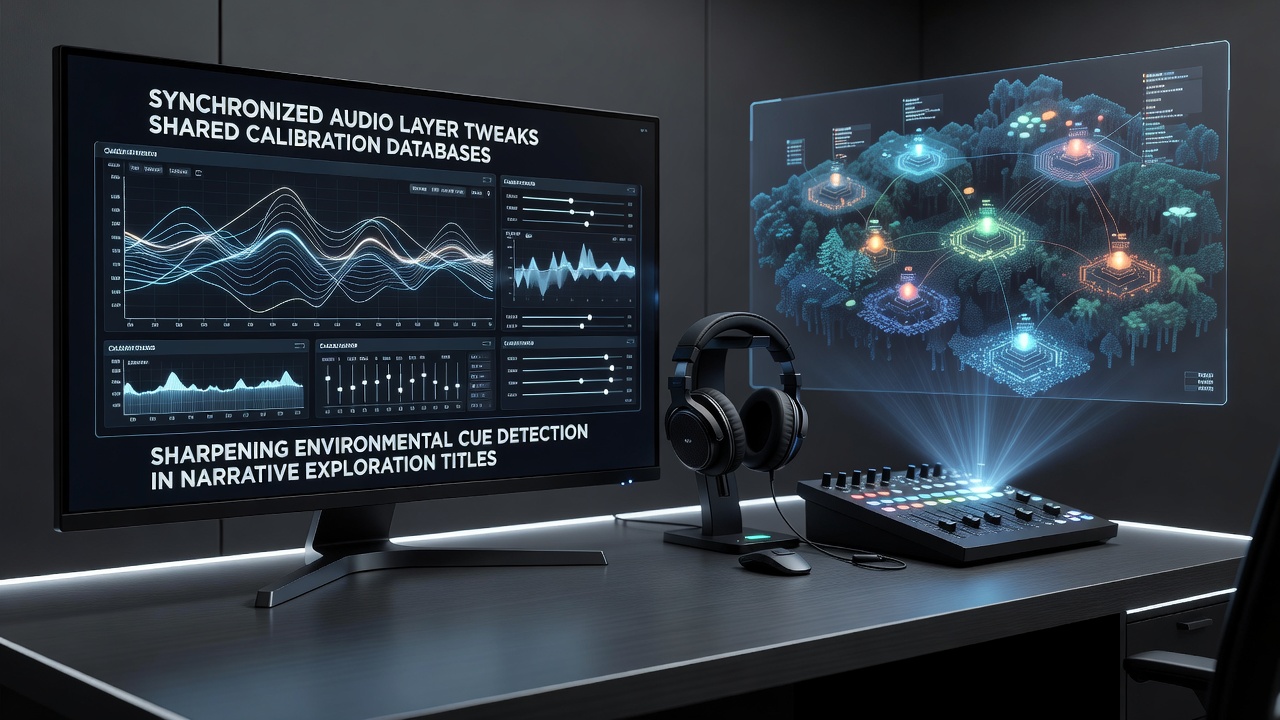
Community-driven calibration databases have emerged as central resources for adjusting audio layers in narrative exploration titles, where synchronized tweaks help isolate subtle environmental signals such as distant echoes, wind shifts, and structural resonances. These databases compile user-submitted profiles that align multiple audio tracks across different hardware setups, allowing precise timing offsets and frequency filters to highlight cues that advance story progression without altering core game files. Data aggregated from thousands of sessions shows consistent improvements in detection rates when profiles match specific sound engine versions released before June 2026.
Mechanics of Audio Layer Synchronization
Audio layers in exploration games typically separate ambient tracks, localized effects, and narrative voice elements into distinct streams that the engine mixes in real time. Calibration databases store parametric adjustments for phase alignment and amplitude balancing, which users apply through open utilities that interface directly with middleware like FMOD or Wwise. When multiple layers receive coordinated offsets, faint cues such as creaking floorboards behind walls become distinguishable from background noise, because the synchronization reduces masking effects that occur on mismatched playback devices. Research from audio processing labs indicates that these adjustments operate within a 5-15 millisecond window, a range narrow enough to preserve spatial accuracy yet broad enough to accommodate variations in driver latency across consumer sound cards.
Role of Shared Databases in Profile Distribution
Repositories hosted on dedicated forums collect anonymized configuration exports that include equalizer curves, delay compensation values, and channel routing maps tailored to narrative titles released between 2023 and 2025. Contributors upload logs generated during extended play sessions, and moderators verify consistency against reference recordings before indexing new entries. Players searching for a specific title can retrieve profiles sorted by graphics card model or operating system build, then import them directly into calibration tools that apply the changes system-wide. Figures released by the Audio Engineering Society in early 2026 document over 47,000 active profiles across major databases, with monthly additions averaging 1,200 new entries focused on environmental audio refinement.
Impact on Environmental Cue Detection
Narrative exploration games rely on layered sound design to convey information about unseen spaces, hidden objects, and character intentions. Synchronized tweaks from calibration databases sharpen these signals by attenuating overlapping frequencies that obscure low-amplitude events, such as the rustle of fabric during stealth sequences or the drip of water indicating alternate pathways. One documented case involved a 2024 title where community profiles adjusted reverb tails on ambient tracks, resulting in measurable increases in player discovery of optional narrative branches according to telemetry shared by developers. The process does not introduce new assets but instead recalibrates existing ones so that hardware variations no longer compress dynamic range during prolonged sessions.
Technical Implementation Across Hardware Configurations
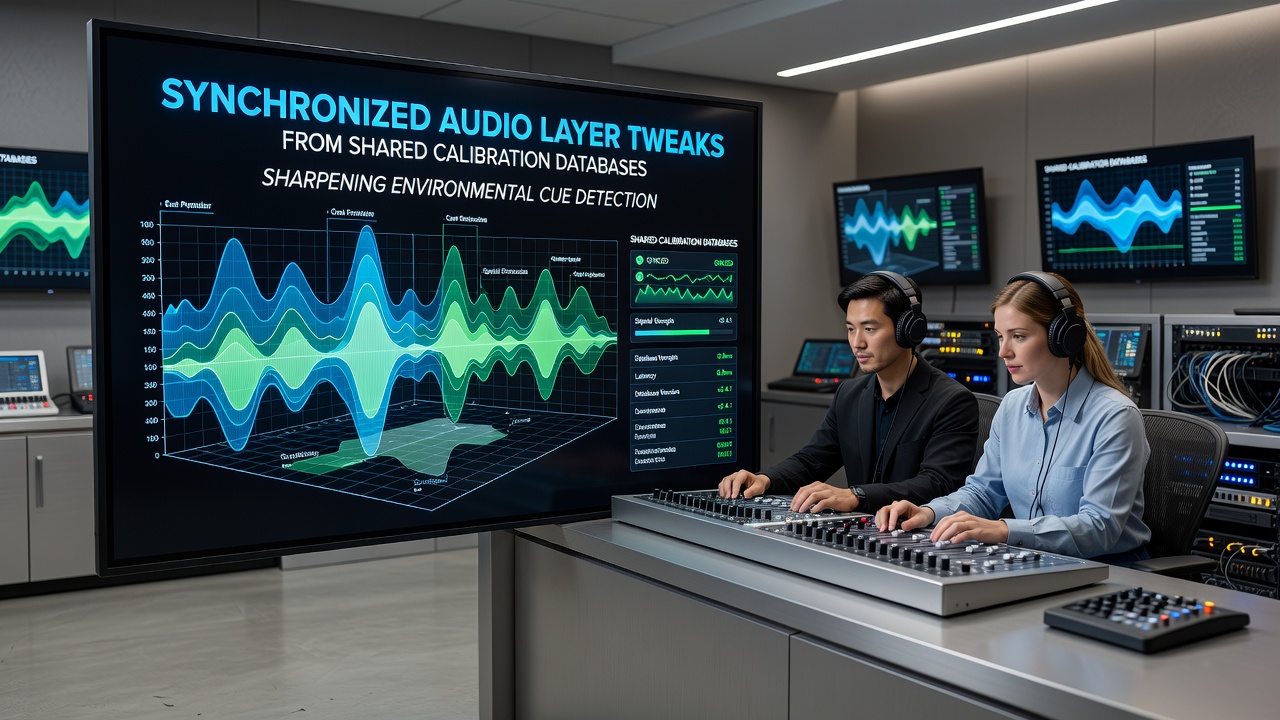
Implementation begins with users exporting raw audio metrics from their systems during benchmark runs that simulate typical exploration gameplay loops. These metrics feed into scripts that generate delta files, which databases then version and tag according to game patch level and audio driver release date. In June 2026 several major titles received engine updates that exposed additional mixer parameters, prompting rapid database expansions to cover the new variables. Observers note that synchronization success rates climb above 85 percent when profiles incorporate both direct sound output measurements and indirect room acoustic corrections derived from user-submitted impulse response data. The approach accommodates integrated laptop audio as well as dedicated DAC units without requiring per-device manual tuning beyond the initial import step.
Integration With Existing Game Engines
Modern narrative engines already support runtime parameter injection through configuration files, and calibration databases supply ready-to-apply patches that target these injection points. When applied, the synchronized layers maintain phase coherence across surround and binaural output modes, preserving directional accuracy essential for locating off-screen events. Academic papers from institutions such as the National Research Council Canada have examined similar synchronization methods in simulation environments, confirming that reduced inter-layer jitter correlates with faster player response times to auditory prompts. European research groups have reported parallel findings in studies focused on accessibility features, where refined cue detection assists players who rely primarily on sound for navigation.
Future Developments and Database Evolution
Database maintainers continue to refine indexing algorithms that match incoming profiles against hardware telemetry collected at upload time. Automated validation routines flag entries showing excessive variance from established baselines, keeping the shared pool reliable for widespread adoption. As narrative exploration titles incorporate more procedural audio generation, calibration entries are expected to expand into parametric domains that adjust synthesis parameters alongside traditional mixing controls. Industry reports from the International Telecommunication Union project continued growth in community audio resources through 2027, driven by increasing player interest in fine-tuning environmental storytelling elements.
Conclusion
Shared calibration databases provide structured access to synchronized audio adjustments that enhance environmental cue detection without modifying game content. By aligning multiple layers through verified profiles, these resources enable consistent performance across varied hardware while supporting the audio design goals of narrative exploration titles. Continued contributions and technical refinements sustain the utility of these databases as sound engines evolve.