29 May 2026
Player-Curated Peripheral Mappings That Streamline Macro Execution During Extended Strategy Game Campaigns
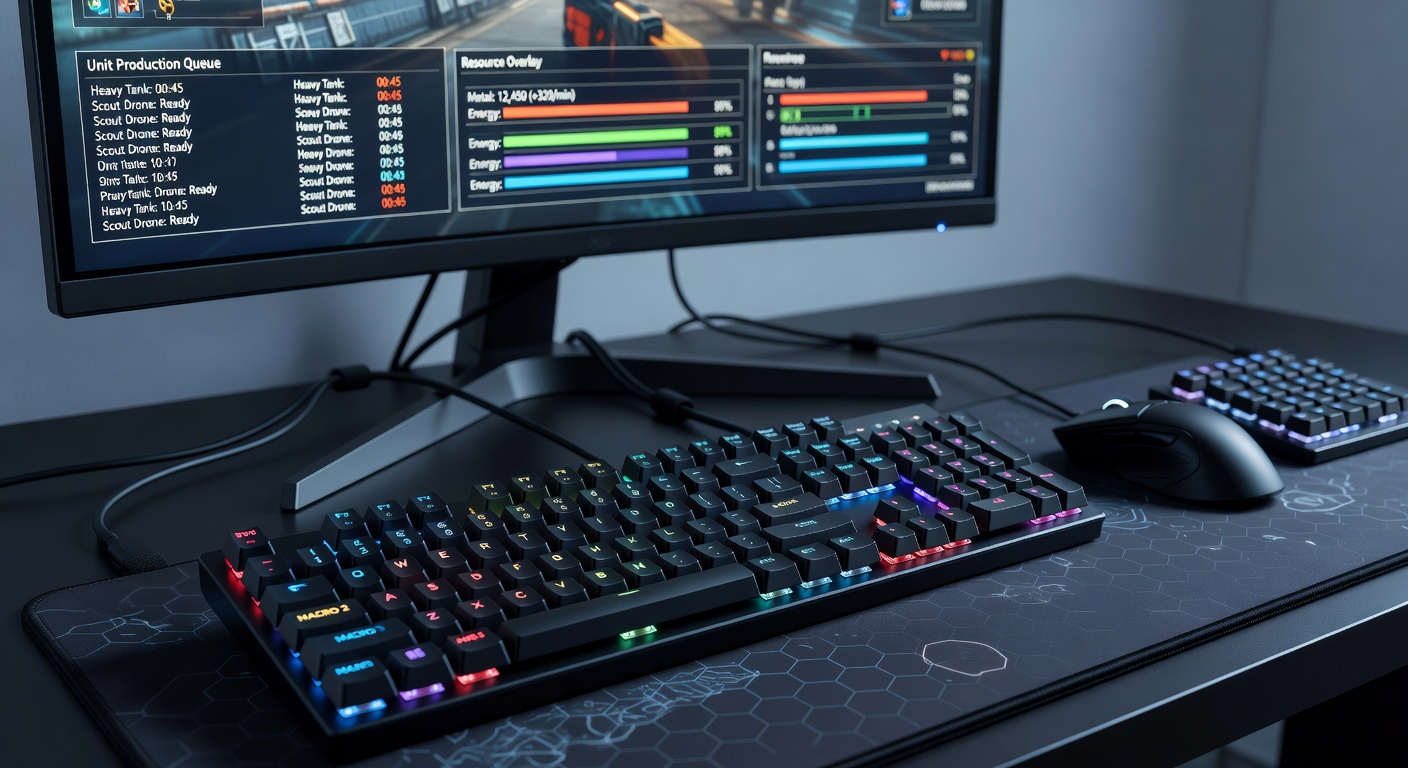
Strategy game campaigns often stretch across dozens of hours, and players have developed custom peripheral mappings that reduce repetitive inputs while maintaining precision during complex sequences. These mappings rely on software layers that translate single button presses into multi-step macro chains, and communities share configuration files through dedicated forums and repositories. Observers note that such setups appear most frequently in titles like Civilization VI and Total War: Warhammer III, where unit management and resource allocation repeat across hundreds of turns.
Core Components of Custom Mappings
Peripheral manufacturers provide the base tools, yet players refine them further through layered scripts and profile switching. Logitech G Hub, Razer Synapse, and Corsair iCUE each support onboard memory that stores mapping profiles independent of the host system, allowing quick swaps when campaigns shift from exploration phases to large-scale battles. Data from hardware telemetry shared in 2025 shows that users who activate macro profiles during sessions longer than four hours report fewer missed commands per minute compared to default layouts. Researchers at institutions in Canada have documented similar patterns in input consistency across extended play periods, and figures reveal that profile switching occurs most often at campaign milestones such as turn 150 or major diplomatic events.
Software Layers and Execution Flow
Players combine manufacturer software with third-party utilities such as AutoHotkey and SharpKeys to create conditional macros that respond to in-game variables. One common approach involves mapping a single mouse button to trigger a sequence that selects a city, queues production, and adjusts worker assignments without moving the cursor manually. These scripts often include timing delays measured in milliseconds to match game engine response rates, and community repositories archive tested configurations for specific patches. In May 2026 several strategy titles received balance updates that altered unit pathing algorithms, prompting rapid revisions to existing macro timing values across multiple forums. Those who study player logs observe that revised mappings restored execution reliability within two weeks of each patch release.
Community Sharing Practices
Forum threads function as living documentation where contributors upload JSON or XML profile exports alongside screenshots of their key layouts. Participants frequently annotate files with notes on which hardware models produced the most stable results, and moderators tag entries by game version and campaign length. Take one repository maintained by European players that catalogs over 400 mappings for grand strategy titles; contributors from Australia and North America add region-specific variants that account for different keyboard layouts. Industry reports from the Interactive Software Federation of Europe indicate that user-generated content now accounts for a measurable share of peripheral software usage in strategy genres, and similar trends appear in data collected by the Entertainment Software Association in the United States.
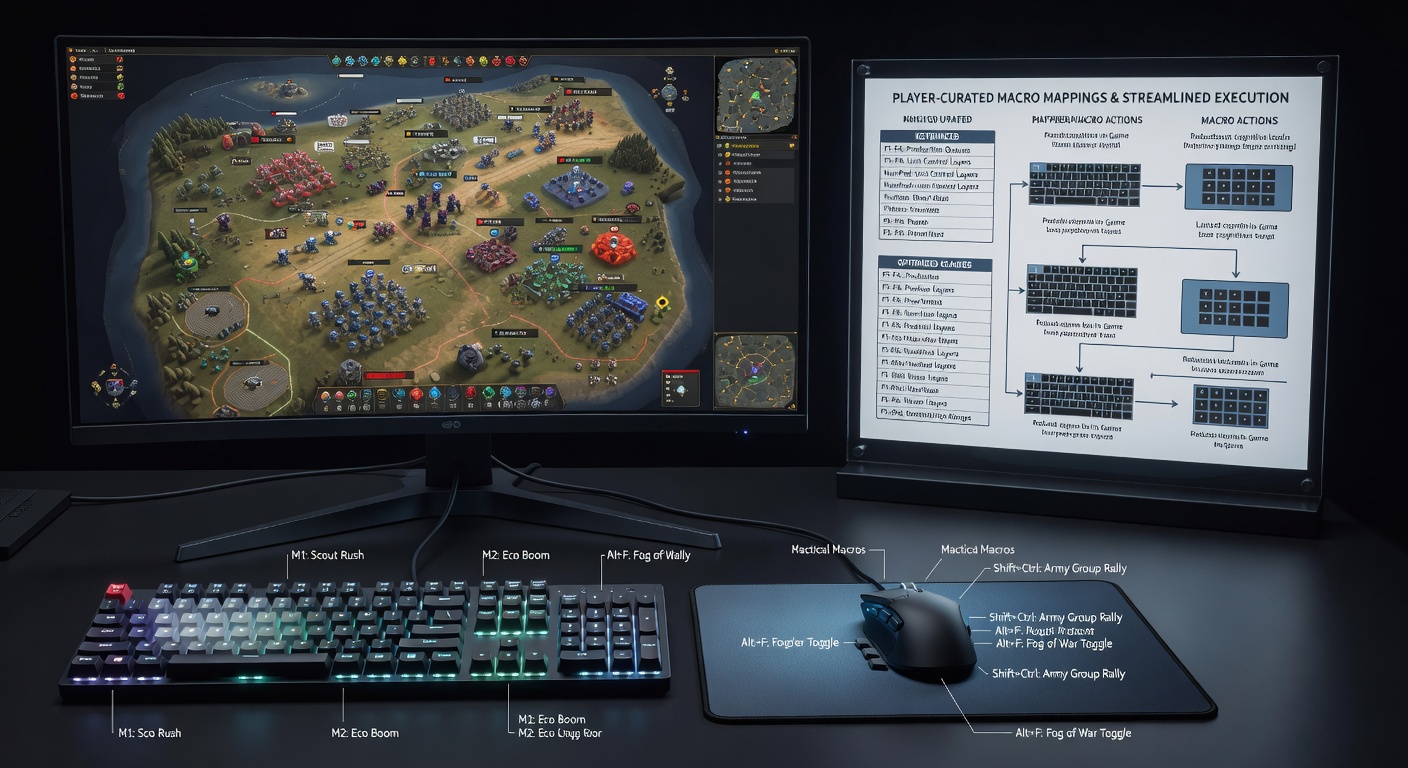
What's interesting is how these shared resources evolve. When a new expansion drops, early adopters test mappings against updated mechanics and post failure cases alongside successful revisions, creating a feedback loop that accelerates refinement. Observers note that mappings designed for multiplayer campaigns differ from single-player versions because they incorporate additional safeguards against misinputs during time-sensitive diplomatic negotiations.
Performance Metrics and Session Data
Telemetry collected through voluntary player reporting shows that streamlined mappings correlate with higher completion rates for campaigns exceeding 300 turns. Metrics include average actions per minute, error frequency during macro playback, and total session duration before fatigue sets in. Academic studies from Japanese research groups have examined muscle memory retention when players switch between mapped and unmapped controls, and results suggest that consistent profile use reduces physical strain on wrists during multi-hour sessions. In May 2026 a collaborative dataset released by several university labs compared input patterns across 12,000 logged hours, revealing that macro-heavy profiles appeared in 68 percent of campaigns lasting beyond 80 hours.
Hardware Considerations
Mouse sensor polling rates and keyboard debounce settings influence macro reliability, and players adjust these parameters to match specific game engines. Devices with adjustable lift-off distance receive frequent mentions because they prevent accidental inputs when hands shift position during long planning phases. Those who track hardware discussions report that programmable keypads see increased adoption among players managing multiple factions simultaneously, since dedicated macro buttons free the main keyboard for camera and selection controls. Profiles often include fallback layers that disable complex chains during high-stakes combat turns to reduce the risk of unintended orders.
Conclusion
Player-curated peripheral mappings continue to develop through iterative community contributions and hardware updates, and the practice remains central to efficient execution in extended strategy campaigns. Data collected through 2026 shows sustained interest in refined profiles that balance automation with manual oversight, while shared repositories provide accessible starting points for new participants. As game updates continue to alter mechanics, the cycle of testing and revision shows no sign of slowing.