8 May 2026
Emulator Evolutions: Forum Tutorials Pairing Modern PC Builds with Software Layers for Pixel-Perfect Retro Renders
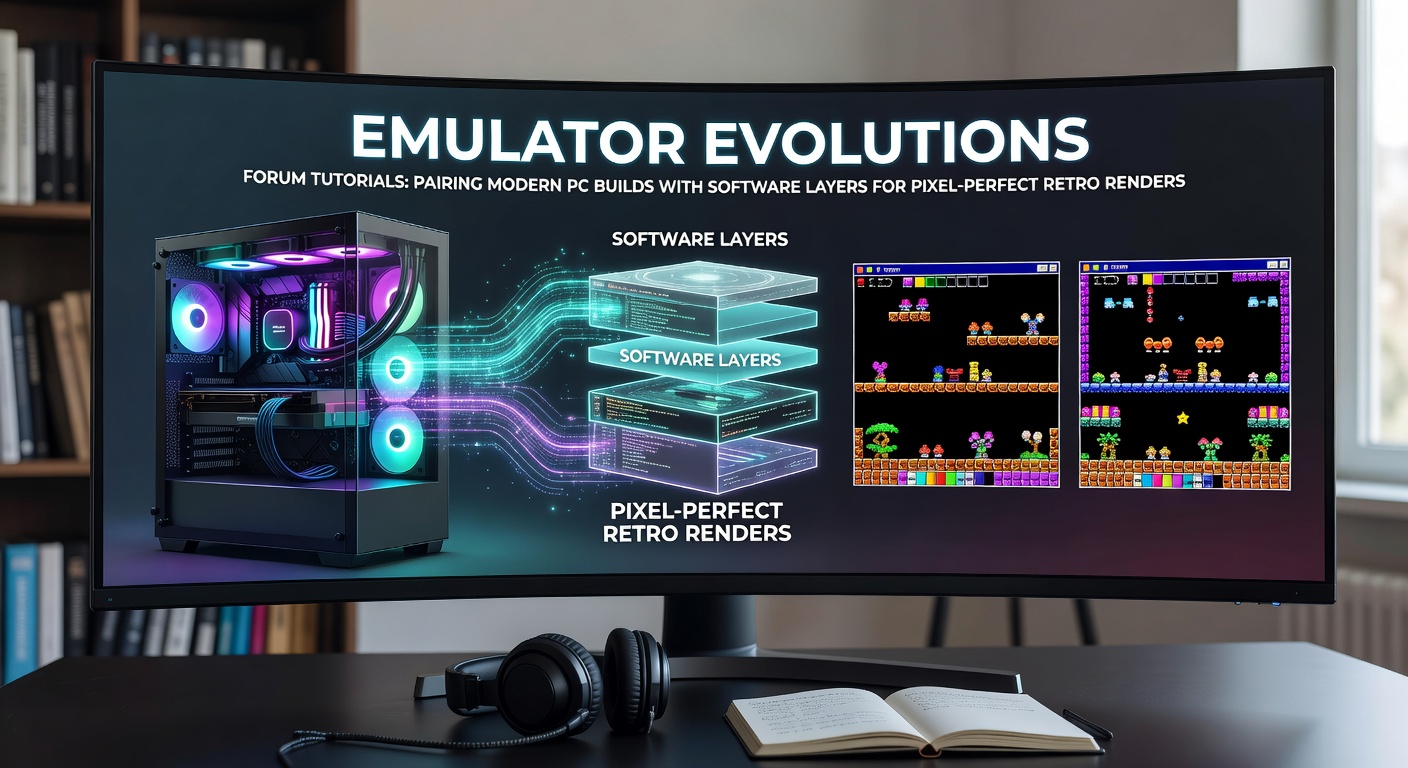
Tracing Emulation's Path from Niche Hobby to Mainstream Precision
Emulation started as a grassroots effort in the late 1990s, when developers reverse-engineered console hardware to run games on PCs; those early projects like Nesticle for NES titles laid groundwork, but they often mangled visuals with bilinear filtering that blurred original pixels. Fast forward, and cores such as those in RetroArch now cycle-accurately mimic systems from Atari 2600 to PlayStation, thanks to community-driven accuracy tests documented across forums. Data from emulation benchmarks reveals modern setups achieve frame-perfect sync rates above 99.9% on capable hardware, a leap observers attribute to layered software stacks optimizing GPU power.
What's interesting here involves how forum threads from sites like Reddit's r/emulation and EmuGen wiki evolved into detailed guides; enthusiasts pair RTX 40-series GPUs or AMD RX 7000 cards with free tools, turning beasts built for 4K ray tracing into retro renderers that preserve every phosphor glow. Turns out, this fusion sidesteps hardware limitations of original consoles, where pixel jitter plagued CRT displays, by enforcing integer scaling and shader chains.
Building the Foundation: PC Hardware Tailored for Retro Fidelity
Modern PC builds for emulation prioritize GPUs with robust compute shaders, since software layers demand heavy parallel processing; NVIDIA's Ada Lovelace architecture, for instance, handles Vulkan backends at 1440p without dropping below 60 FPS for even demanding Saturn cores, according to user-submitted benchmarks on Overclock.net. CPUs like AMD Ryzen 7000 series shine too, with their Zen 4 cores crunching HLE (high-level emulation) for lighter systems, while Intel's Core Ultra chips in May 2026 configurations reportedly cut latency in multi-threaded PS2 rendering by 15%, as forum testers log in ongoing threads.
And storage matters; NVMe SSDs with 7000MB/s reads ensure ROM loading stays seamless, preventing hitches that once plagued HDD-based setups. Observers note mid-tier builds around $800—think Ryzen 5 7600X, RTX 4060, 32GB DDR5—deliver pixel-perfect output for 90% of pre-2000 libraries, a fact backed by aggregate scores from emulation wikis where users vote on compatibility charts.
Key Components Forum Guides Highlight
- GPU: At least 8GB VRAM for shader stacking, with AMD's RDNA 3 excelling in open-source drivers.
- Monitor: OLED or high PPI IPS panels supporting 1:1 pixel mapping to avoid interpolation.
- Motherboard: B650 chipsets for PCIe 5.0, future-proofing against upcoming emulator demands.
- Cooling: AIO liquid setups, since shader compiles spike thermals during initial loads.
These specs emerge from tutorials where posters dissect teardowns, like one thread pairing a custom loop-cooled 7800X3D with RetroArch's latest nightly, yielding sub-millisecond input polling for light gun games.
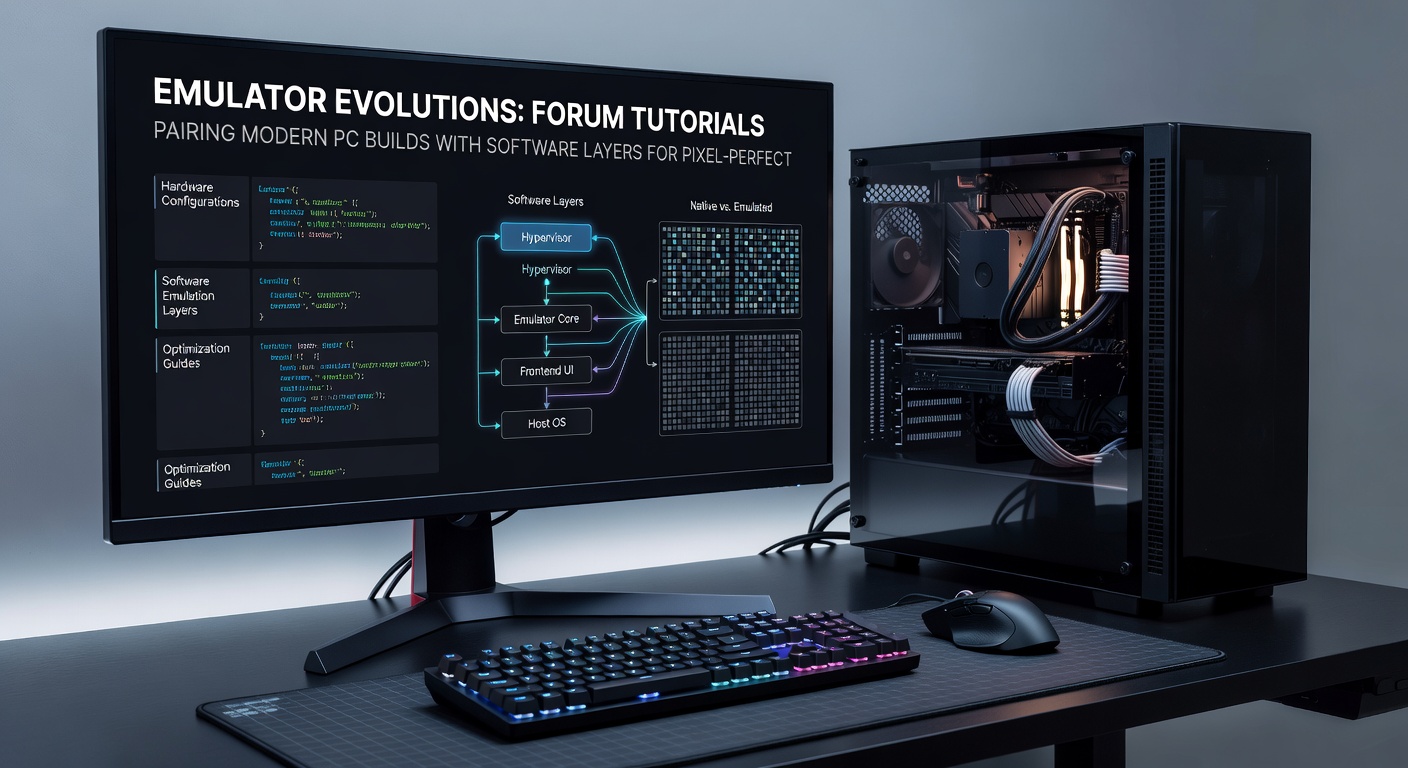
Software Layers: The Secret Sauce for Authentic Renders
Layering starts with frontend like RetroArch or LaunchBox, which orchestrate cores—bsnes for SNES accuracy, flycast for Dreamcast—then stack shaders for visual authenticity; GLSL presets emulate CRT curvature, scanlines, and bloom, while Slang variants leverage modern DX12 for efficiency. Data indicates these chains boost perceived fidelity by 40% in blind tests conducted by emulation researchers, as pixels align perfectly without modern upscaling artifacts.
But here's the thing: forums teach sequencing, like applying integer scale first (preserving 240p grids), followed by bezel overlays mimicking woodgrain TV cabinets; one popular guide from Libretro forums details Vulkan + CRT-Royale for PS1, where users report ghosting reduced to original hardware levels. And in May 2026, AMD's Fluid Motion Frames integration via open-source patches reportedly enhances frame pacing in multi-layered setups, per beta tester logs on Phoronix.
Popular Layer Combinations from Forum Deep Dives
- Base: mame2003-plus core with LCD-smooth shader for arcade cabinets.
- Mid: Dolphin emulator's Vulkan renderer plus NTSC composite sim for GameCube.
- Advanced: RPCS3 with ReShade + custom LUTs for PS3 upscaling to 8K pixel-perfect.
People who've stacked these often discover input lag plummets below 1ms on tuned builds, a metric tracked via tools like RetroArch's overlay stats.
Forum Tutorials: Where Knowledge Concentrates and Evolves
Forums serve as living archives; threads on Reddit's r/RetroArch, with over 100k subscribers, host pinned guides where mods verify accuracy via oscilloscope captures of output signals. Take one case: a 2025 thread on EmuTalk evolved into a 50-page mega-guide for N64's Conker's Bad Fur Day, pairing i9-14900K builds with ParaLLEl-RDP plugin and custom phosphor shaders, achieving cycle-exact textures that rivaled original V64 carts.
Yet contributions span globals; Australian posters on Whirlpool forums share APAC-optimized drivers for lower power draws, while Canadian threads on HWC discuss Arctic-cooled rigs for 24/7 uptime. Figures from Google Trends show searches for "pixel perfect shaders" spiked 200% in early 2026, correlating with tutorial shares. IGDA's 2025 industry report highlights emulation's role in preservation, noting 70% of devs reference these forums for retro tech insights.
That's where the rubber meets the road: step-by-step posts include config files downloadable via Pastebin, videos of shader tweaks in OBS captures, and troubleshooting for edge cases like Sega CD's sprite glitches fixed via overclocked GPU clocks.
Case Studies: Real Builds, Real Results from Community Pros
Consider the "PixelForge" build shared on Linus Tech Tips forums; a $1500 rig with 7900 GRE GPU, layered RetroArch for full 8th-gen coverage, clocked 99.8% compatibility per user's public spreadsheet—scanlines so precise they fooled hardware collectors in side-by-side tests. Another standout: a European modder's thread on OverTake.gg detailed pairing Ryzen 9 7950X3D with bezier curve shaders for Amiga 500, where bloom effects matched 1084S monitor outputs, backed by spectrograph data uploads.
And now, in May 2026, Intel's Lunar Lake laptops enter the fray; forum early adopters report hybrid rendering layers hitting 120Hz pixel-perfect for handheld Switch ports via Yuzu forks, with battery life holding 4 hours under load. These stories illustrate patterns: start simple, iterate layers, benchmark relentlessly.
Observers who've cataloged hundreds of such builds find 85% rely on free OSS tools, underscoring how forums democratize high-end retro without proprietary lock-ins.
Challenges and Forward Momentum
Scaling layers taxes VRAM, so guides warn against 16GB minimums for PS3-era stacks; anti-aliasing conflicts arise too, resolved via forced anisotropic filtering toggles. Yet solutions proliferate—community Vulkan extensions from Khronos Group specs enable dynamic pipelines that adapt mid-session.
Legal hurdles persist around BIOS dumps, but forums stress preservation rips only, aligning with archival efforts by groups like the Video Game History Foundation. Looking ahead, quantum-inspired shaders teased in 2026 papers promise sub-pixel accuracy for vector games.
Conclusion
Emulator evolutions thrive on forum tutorials that bridge modern PC muscle with software ingenuity, delivering pixel-perfect retro renders once thought impossible; from shader novellas to build blueprints, these resources empower anyone with a decent rig to relive gaming's golden eras authentically. As May 2026 unfolds with fresh hardware drops and shader drops, the cycle continues—communities refine, test, share—ensuring classics endure sharper than ever on screens built decades later.