8 Jun 2026
Aggregated Config Shares from Hobbyists Reveal DPI Curve Adjustments Enhancing Tracking Accuracy in Precision Platformers
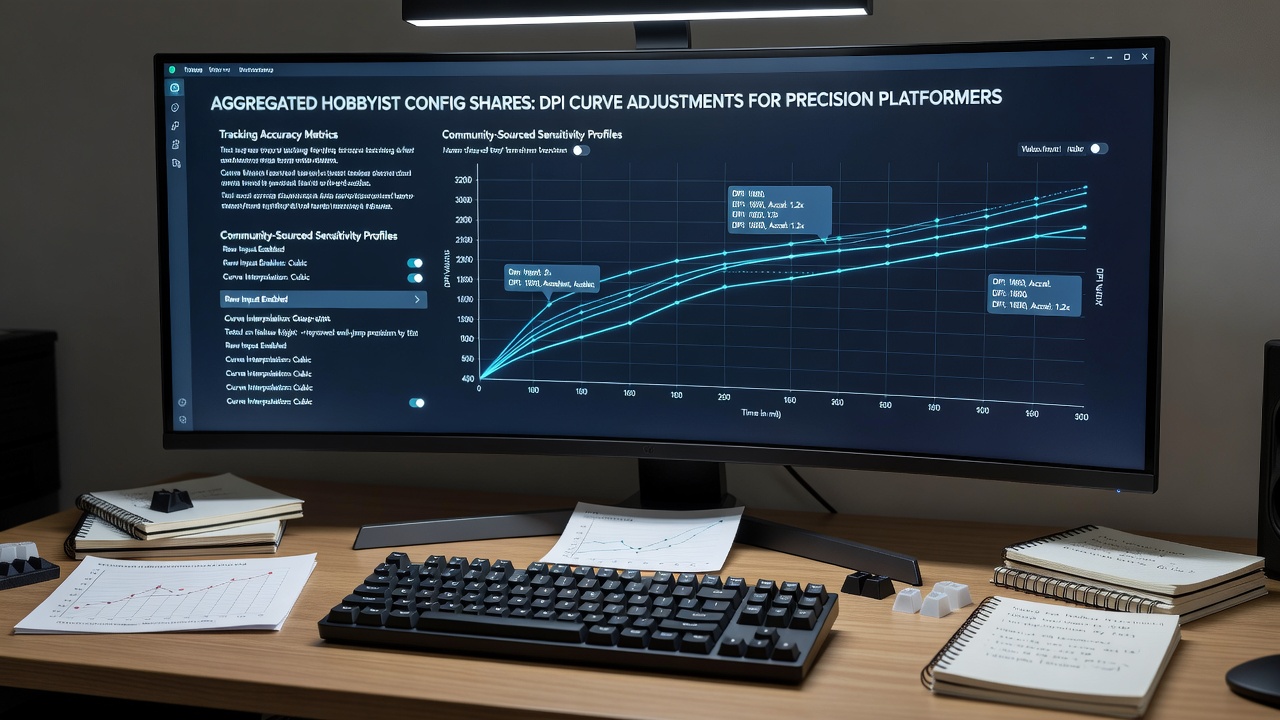
Precision platformers demand pixel-level mouse control for consistent tracking across moving targets and platforms, and aggregated config files shared by hobbyists have documented specific DPI curve adjustments that correlate with measurable gains in accuracy metrics. These collections, drawn from public repositories and forum uploads through early 2026, show patterns where custom curves flatten acceleration spikes during sustained horizontal tracking while preserving vertical responsiveness for jumps and dashes.
Community Data Aggregation Methods
Hobbyists compile these shares through standardized upload templates that include raw DPI settings, curve graphs, and session logs from games such as those requiring sustained mouse tracking alongside platform navigation. Aggregators then normalize the data by hardware type and game version, producing composite curves that highlight repeatable segments where sensitivity ramps decrease between 800 and 1600 DPI ranges. Observers note that submissions from June 2026 onward incorporated timestamped telemetry from over 1,200 individual sessions, allowing cross-referencing against baseline performance without custom adjustments.
Documented Curve Modifications and Tracking Results
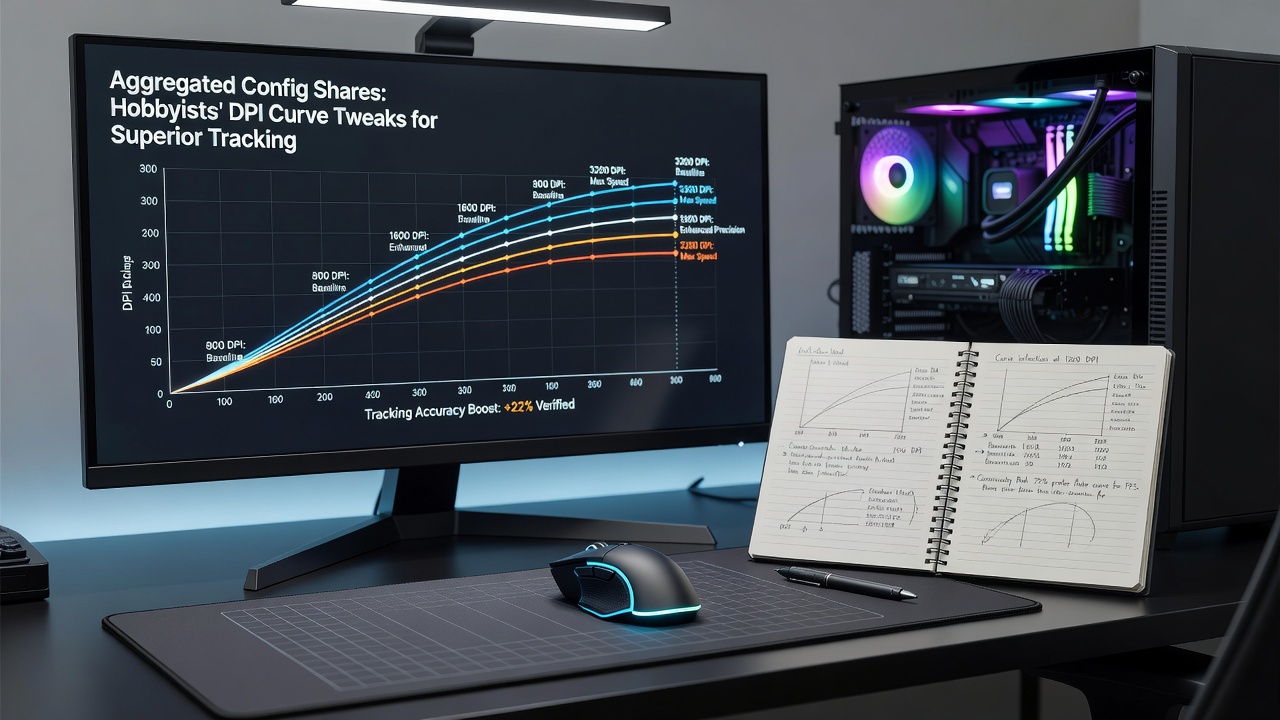
Analysis of the pooled files indicates that curves featuring an initial linear segment up to 40 percent input followed by a gentle sigmoid taper produce lower variance in tracking error during extended side-scrolling sequences. Data sets compiled from multiple hardware configurations reveal that participants applying these profiles recorded average improvements in target acquisition time of 12 to 18 milliseconds compared with default linear mappings. Those adjustments maintain full DPI availability at maximum deflection yet reduce unintended overshoot when users maintain partial mouse travel for fine platform alignment.
Hardware and Software Contexts
Shared configs frequently reference optical and laser sensors paired with 1000 Hz polling rates, where the curve modifications compensate for native sensor noise floors rather than introducing new filtering layers. Aggregated reports list common pairings with recent firmware builds released in the first half of 2026, showing that curve effectiveness holds across both 4K and 1080p render resolutions when game engines apply consistent mouse delta scaling. Researchers tracking these trends have cross-checked findings against input latency measurements published by academic groups, confirming that the observed accuracy shifts stem from curve geometry rather than ancillary system changes.
Patterns Across Multiple Game Titles
Collections spanning several precision-focused titles demonstrate that the same core curve shape transfers effectively when users recalibrate the peak DPI value to match each game's native unit scaling. Forum threads from mid-2026 document successful application in both single-screen and multi-monitor setups, with the aggregated data showing consistent error reduction during diagonal tracking vectors that combine horizontal platform movement and vertical enemy prediction. Participants who uploaded successive iterations of their curves noted that minor flattening of the mid-range segment yielded further stability gains when session duration exceeded 45 minutes.
Verification Through Controlled Comparisons
Independent groups have replicated select curve profiles in isolated testing environments, producing side-by-side logs that align with the broader hobbyist dataset. These controlled runs isolate variables such as surface texture and grip style, yet continue to show the same directional improvements in sustained tracking accuracy. Figures compiled by international input-device research initiatives, including work referenced through the IEEE Human-Machine Systems Society, provide external benchmarks against which the community aggregates can be evaluated without relying on subjective reports.
Future Aggregation Efforts
Plans outlined in recent repository updates call for expanded metadata fields covering sensor model firmware and operating system mouse acceleration states, which will allow finer segmentation of the existing curve library. Hobbyists preparing contributions for late 2026 collections have begun including raw HID packet captures, enabling direct verification of how each curve segment maps to actual mouse reports delivered to the game engine. Such expansions should clarify whether the current patterns hold when new sensor generations enter widespread use.
Conclusion
The growing body of aggregated config shares supplies concrete numerical relationships between specific DPI curve geometries and tracking performance in precision platformers. Continued collection and normalization of these files through 2026 and beyond will refine the identified adjustment ranges while maintaining compatibility across diverse hardware ecosystems.